



Personalized Retirement Strategies
Investment Management
Tax Planning
Estate Planning
Retirement Account Management






There comes a point when retirement stops feeling like something that's years away and starts feeling real. Maybe you're in your late 50s. Maybe you've crossed into your early 60s. Your mortgage is getting smaller, the kids are on their own, and you've spent decades building your career. Retirement is no longer a distant goal. It's the next chapter. That's exciting, but it can also bring a lot of questions. At Bradford Financial Advisors, we've found that most people don't wonder whether they want to retire. They wonder whether they can. They ask themselves if they've saved enough, if they're making the right financial decisions, and if they'll be able to maintain the lifestyle they've worked so hard to build. The truth is that retirement readiness isn't determined by a single number in your investment account. It's about understanding your overall financial picture and having confidence in your plan. If you're approaching retirement, here are seven questions worth asking yourself. 1. Will My Money Last as Long as I Do? This is usually the first concern people bring up, and for good reason. Retirement today can last 20, 25, or even 30 years. That means your savings may need to support you longer than your career did. The question isn't simply, "How much have I saved?" It's also: • How much income will I need each month? • How much can I safely withdraw? • How will inflation affect my spending? • What happens if the market declines early in retirement? A retirement plan should account for all of these factors. Without one, it's easy to either spend too cautiously and miss out on experiences you've been looking forward to, or spend too aggressively and create problems later. 2. Do I Know Where My Retirement Income Will Come From? Many people spend decades focusing on growing their retirement accounts, but they spend very little time thinking about how they'll actually use them. Retirement income often comes from several different sources, including: • Social Security • Employer retirement plans • IRAs • Investment accounts • Pension benefits, if available • Part-time work or consulting The order in which you draw from these accounts can have a significant impact on your taxes and how long your savings last. A thoughtful income strategy can help create stability throughout retirement instead of leaving you wondering where each paycheck will come from. 3. Have I Planned for Healthcare Costs? Healthcare is one of the largest expenses many retirees face, yet it's often underestimated. While Medicare provides valuable coverage, it doesn't pay for everything. Premiums, deductibles, prescriptions, dental care, vision services, and long-term care can all affect your retirement budget. It's important to ask yourself: • What will my monthly healthcare costs be? • Should I consider supplemental coverage? • Have I planned for unexpected medical expenses? • What would happen if I needed long-term care? Preparing for these costs now can prevent them from becoming financial surprises later. 4. Am I Paying Attention to Taxes? Many people assume taxes become less important once they stop working. In reality, retirement often introduces a different set of tax planning opportunities and challenges. Withdrawals from traditional retirement accounts may be taxable. Social Security benefits can be taxable depending on your income. Required minimum distributions eventually come into play for many retirees. The good news is that thoughtful planning may help reduce your lifetime tax burden. This is one reason we encourage clients to review their retirement plan before the end of each year instead of waiting until tax season arrives. When you plan ahead, you often have more options. 5. Does My Investment Strategy Still Fit My Goals? The investment approach that helped you build wealth may not be the same strategy that helps preserve it. As retirement approaches, it's worth reviewing whether your portfolio still aligns with your goals, your timeline, and your comfort level with market fluctuations. That doesn't necessarily mean becoming overly conservative. Instead, it means making intentional decisions. Ask yourself: • Am I taking more risk than I need to? • Is my portfolio properly diversified? • Would I be comfortable if the market declined shortly after I retired? A well-balanced investment strategy should help you pursue growth while recognizing that protecting your retirement income becomes increasingly important. 6. Have I Thought About What Retirement Actually Looks Like? This question surprises people. After years of focusing on the financial side of retirement, it's easy to forget about the personal side. Retirement isn't just about leaving your job. It's about deciding what you're moving toward. Some people want to travel. Others want to spend more time with grandchildren. Some plan to volunteer, start a business, work part time, or simply enjoy a slower pace of life. Your financial plan should support those goals. If your dream is to spend winters somewhere warm or take your grandchildren on annual vacations, your retirement plan should reflect those priorities. Money is simply a tool that helps make those experiences possible. 7. Do I Have Someone I Trust to Help Me Along the Way? One of the biggest misconceptions about retirement planning is that you have to figure everything out on your own. The internet offers endless opinions, calculators, and investment advice. Unfortunately, much of it is based on averages. You aren't an average. Your retirement depends on your savings, your family, your goals, your health, your income, and your priorities. That's why personalized guidance matters. At Bradford Financial Advisors, we enjoy sitting down with people and having real conversations about their future. We explain things in plain language, answer questions honestly, and help clients understand their options without pressure or confusing financial jargon. Our goal isn't to overwhelm you with charts or complicated strategies. Our goal is to help you feel confident about where you're headed. Retirement Readiness Is About More Than Numbers It's easy to compare yourself to friends, coworkers, or articles you read online. Someone says you need a million dollars to retire. Someone else says two million. The truth is that there isn't a universal retirement number. Every family is different. Your retirement income needs depend on your lifestyle, your spending habits, where you live, your health, and the experiences you hope to enjoy. That's why retirement planning isn't about chasing someone else's benchmark. It's about building a plan that's realistic for your life. Confidence Comes From Having a Plan One of the best parts of our job is watching people leave a meeting feeling lighter than when they walked in. Not because every question has a perfect answer. Not because markets suddenly become predictable. But because they finally have a plan. When you understand where your retirement income will come from, how your investments fit together, what your tax strategy looks like, and how you'll handle the unexpected, retirement feels less intimidating. It starts to feel achievable. If you've been asking yourself whether you're really ready to retire, you don't have to answer that question alone. A conversation today can help you better understand where you stand, identify opportunities to strengthen your plan, and give you greater confidence as retirement gets closer. After all, retirement shouldn't be a leap into the unknown. It should be the reward for decades of hard work, backed by a plan you understand and trust.

Retirement Planning Checklist: 10 Things to Review Before Fall If retirement is starting to feel closer than it used to, you're not alone. Many people spend the summer focused on vacations, family gatherings, and enjoying the nice weather. Before long, Labor Day comes and the calendar starts filling up. Suddenly, the holidays are around the corner, and another year has passed. That is exactly why late summer is one of the best times to review your retirement plan. You still have time to make meaningful adjustments before year end. Whether that means increasing your retirement contributions, reviewing your investment strategy, or making tax planning decisions, acting now gives you more flexibility than waiting until December. At Bradford Financial Advisors, we often tell clients that retirement planning is not something you do once and forget about. Your life changes, the markets change, and tax laws evolve. Your plan should keep up. Here are ten things worth reviewing before fall arrives. 1. Are You Saving Enough? One of the simplest questions is often the hardest to answer. Most people know they're saving for retirement, but they aren't sure whether they're saving enough to reach their goals. Ask yourself: Have my income or expenses changed this year? Am I contributing enough to my 401(k) or IRA? Have I increased my contributions after receiving a raise? Even increasing your contribution by one or two percent can make a meaningful difference over time thanks to compound growth. If you're over age 50, you may also qualify for catch up contributions, allowing you to save even more before retirement. 2. Review Your Investment Allocation The investment strategy that made sense ten years ago may not make sense today. As retirement gets closer, your portfolio should reflect your current goals and your comfort with risk. That does not mean moving everything into cash. It does mean making sure your investments match your timeline. Questions to consider include: Am I taking more risk than I need to? Am I diversified? Has market growth caused my portfolio to drift away from my target allocation? Sometimes a simple rebalance is all that's needed. 3. Check Your Retirement Income Plan Saving for retirement is only part of the equation. Eventually, those savings have to become income. Many people spend years building retirement accounts without thinking about how they'll actually withdraw the money. Your retirement income plan should answer questions like: Which accounts should I withdraw from first? How much can I safely spend each year? How will taxes affect my withdrawals? What happens if the market declines early in retirement? Having a strategy can help reduce unnecessary stress later. 4. Review Your Beneficiaries This is one of the easiest tasks on the list, and one of the most overlooked. Life changes. People get married, divorced, have children, lose loved ones, or establish trusts. Your retirement accounts, life insurance policies, and other financial accounts should have beneficiary designations that still reflect your wishes. An outdated beneficiary can create unnecessary complications for your family. Reviewing these takes only a few minutes but can have lasting consequences. 5. Think About Healthcare Costs Healthcare is one of the biggest expenses many retirees face. While Medicare helps cover many costs, it does not cover everything. Ask yourself: Have I planned for premiums? What about prescription costs? Will I need supplemental insurance? Have I considered long term care expenses? Ignoring healthcare costs can create a gap in an otherwise solid retirement plan. Planning ahead gives you more options. 6. Review Your Tax Strategy Taxes do not disappear in retirement. In many cases, thoughtful tax planning can help you keep more of your retirement income. Depending on your situation, it may make sense to: Review Roth conversion opportunities. Evaluate taxable investment income. Consider future required minimum distributions. Coordinate retirement withdrawals with your tax bracket. These strategies are often easier to implement before the end of the year. Waiting until tax season may limit your choices. 7. Make Sure Your Estate Plan Is Current Estate planning is about more than deciding who receives your assets. It's about making life easier for the people you care about. Review your: Will Trust documents Powers of attorney Healthcare directives If you haven't looked at these documents in several years, or if your family situation has changed, now is a good time to revisit them. 8. Build or Strengthen Your Emergency Fund Retirement does not eliminate unexpected expenses. Home repairs, medical bills, helping family members, or replacing a vehicle can all happen without warning. Having cash available for emergencies can help you avoid withdrawing investments during unfavorable market conditions. A healthy emergency fund adds flexibility to your overall retirement plan. 9. Consider Your Retirement Lifestyle Numbers matter, but retirement is about more than spreadsheets. Take time to think about what retirement actually looks like. Do you want to travel? Spend more time with grandchildren? Volunteer? Start a small business? Work part time? Your financial plan should support the life you want to live, not simply reach an arbitrary savings number. The clearer your vision becomes, the easier it is to build a plan around it. 10. Sit Down With a Financial Advisor There is a lot of information available online. Some of it is helpful. Some of it creates more confusion than clarity. A retirement plan should be built around your goals, your family, your income, and your circumstances. What works well for one person may not be the right solution for someone else. A conversation with a financial advisor can help identify opportunities, answer questions, and provide confidence that you're heading in the right direction. Why Late Summer Matters People often assume retirement planning happens at the beginning or end of the year. In reality, August and September can be some of the most productive months for reviewing your financial plan. There is still time to make adjustments before year end. You can revisit savings goals, update investment strategies, review tax opportunities, and prepare for the decisions that often come later in the fall. Waiting until December usually means fewer options and more pressure. Planning now allows you to move into the final months of the year with confidence instead of scrambling to catch up. Retirement Planning Is About Confidence One of the biggest misconceptions about retirement is that it's all about reaching a certain dollar amount. The truth is that confidence comes from knowing your plan has been thought through. It's understanding where your income will come from. It's knowing you've prepared for taxes, healthcare, and unexpected expenses. It's feeling comfortable that your investments support your goals instead of keeping you awake at night. At Bradford Financial Advisors, we believe retirement planning should feel approachable, not overwhelming. We enjoy helping people understand their options and build realistic plans that fit their lives. That starts with honest conversations, practical guidance, and a focus on long term financial confidence. If it's been a while since you've reviewed your retirement plan, now is a great time to take another look. A few thoughtful adjustments today can make a meaningful difference for the years ahead.
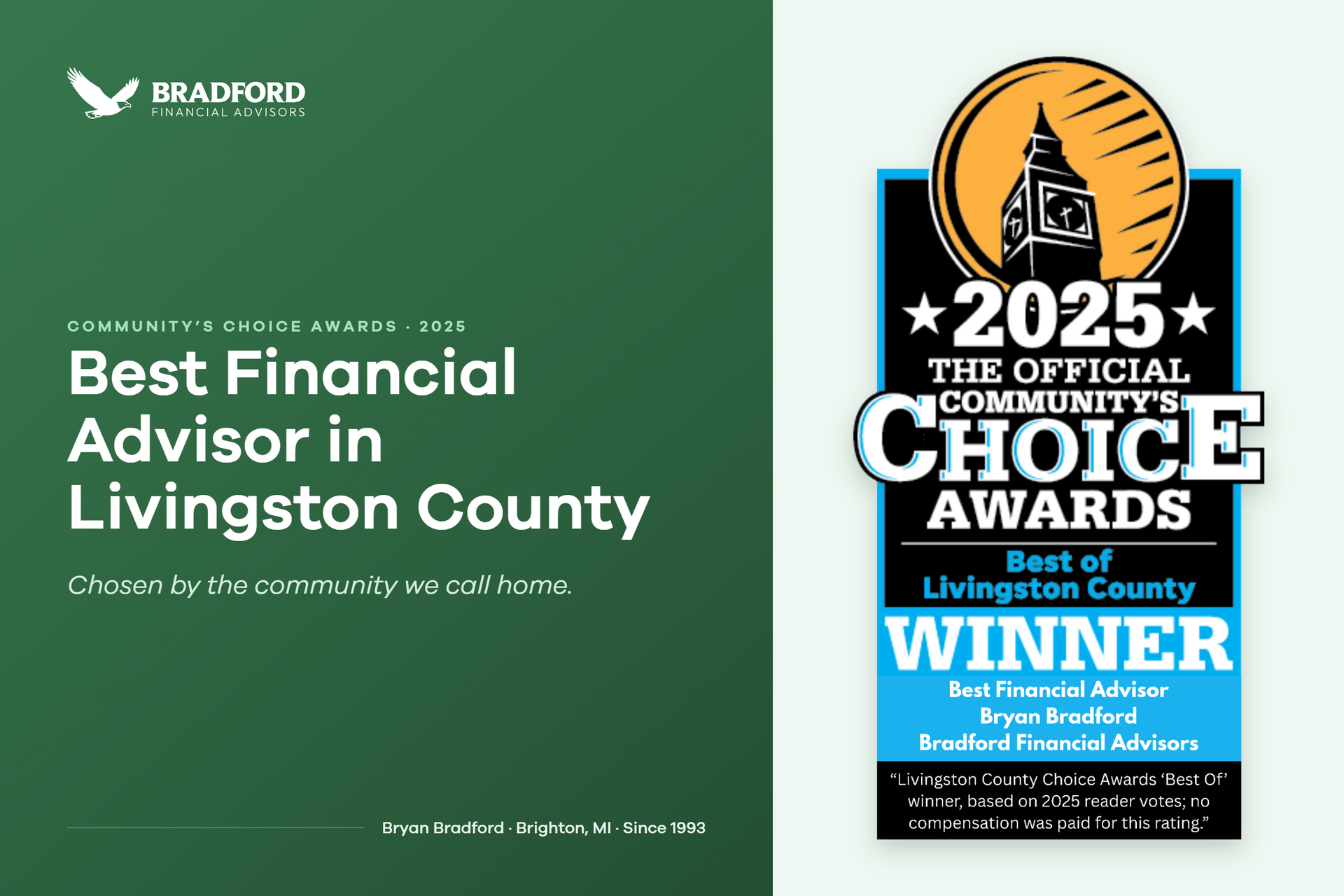
Livingston County Names Bradford Financial Advisors 2025 Best Financial Advisor
Understand your 403(b) fees & options. Maximize retirement savings with our expert guidance. Contact us for a personalized plan!

If you are approaching retirement as a teacher, veteran or first responder, here are four questions you should be asking to best prepare yourself for the next chapter.

Understand pension survivor benefits to secure your loved ones' future. Consult our experts for tailored retirement planning today!

Bradford Financial Advisors explain how to find and pay for healthcare in early retirement before medicare as a veteran or first responder.

If you’re a teacher, you’ve spent your career helping others plan for the future. But when it comes to your own future, you may be missing some important information about your retirement savings to plan as well as you can. One of the most common places this happens is with the 403(b) plan.

Here are four major considerations when making your long-term financial plan as a teacher,veteran, or first responder. Because public servant retirement often includes pensions, deferred compensation plans, and earlier retirement eligibility.

Learn how much of your income to invest for retirement. Get expert advice on 401k, IRA rollovers, & financial planning today!